

.png)
In multi-site retail, small inconsistencies quietly chip away at your brand’s strength. One store’s music feels off, another’s signage strays, and scent profiles shift without notice. The real problem isn’t missing standards—it’s managing them with disconnected tools and teams. Centralized in-store experience management gives you a single control layer to orchestrate every touchpoint, ensuring brand consistency at scale and driving measurable impact across all locations.
The Challenge of Inconsistency
Managing multiple retail sites is no small feat. Each location may drift from brand standards, creating problems that compound over time.
Fragmented Execution Across Sites
When communication breaks down across different sites, execution suffers. One store may play the wrong music, another might display outdated signage, and a third could have a scent that doesn't align with your brand. Each inconsistency chips away at the cohesive brand image you've worked hard to cultivate.
Fragmented systems make these issues worse. If each location uses different tools or management approaches, the challenge of maintaining a consistent brand experience becomes monumental. Without a unified approach, individual store managers are left to interpret and apply brand standards on their own. This patchwork method can lead to a dilution of your brand identity, leaving customers with mixed impressions.
Quiet Frustrations and Missed Opportunities
Inconsistencies don't just frustrate you, they also frustrate your customers. When customers encounter a different experience at each location, their trust in your brand can waver. This inconsistency impacts customer loyalty and the likelihood of repeat visits.
The opportunity cost is significant. Each missed opportunity to create a consistent, engaging experience is a lost chance to drive sales and build brand loyalty. Retailers often underestimate how these small inconsistencies can add up to a big impact on revenue. By addressing these challenges, you can unlock new revenue streams and strengthen customer relationships.
Centralized In-Store Experience Management
The key to overcoming these challenges is to adopt a centralized management system. This approach allows you to unify the execution of brand standards across all locations.
Control Not Coordination
Centralized management is about having control, not just coordination. By centralizing the management of music, scent, signage, and retail media, you ensure every store aligns with your brand's core values. A single system enables you to push updates and changes across all locations simultaneously, reducing the burden on individual store managers.
This level of control gives you the power to maintain brand integrity without micromanaging. For example, centralized inventory systems show how coordinated efforts can streamline operations, leading to improved consistency and efficiency.
Orchestrating Every Touchpoint
A centralized system allows you to orchestrate every touchpoint in the customer journey. From the moment customers enter your store, they should experience a seamless and consistent environment. This orchestration includes everything from the music playing overhead to the scent in the air and the visuals on digital displays.
When you control these elements from a single platform, you can ensure they work together to create an immersive experience. This not only enhances the customer experience but also influences customer behaviour positively, encouraging longer stays and more purchases.
Driving Brand Consistency at Scale
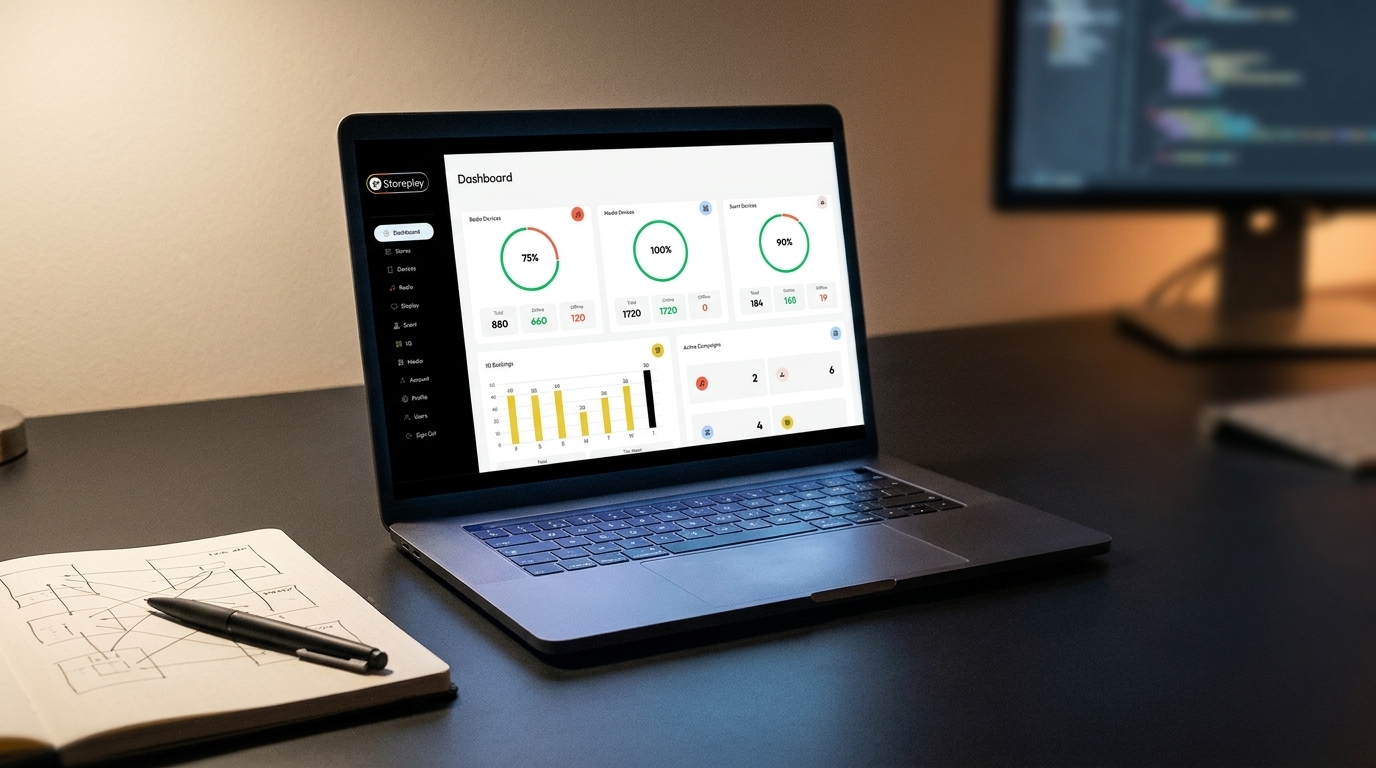
Consistency at scale is crucial for building a strong brand presence across multiple locations. This consistency translates directly into measurable business outcomes.
Measurable Impact on Store Performance
With centralized management, you gain the ability to measure and analyze the impact of your in-store elements on performance. This data-driven approach enables you to make informed decisions about what works and what doesn't. By understanding which aspects of your in-store experience drive sales and customer engagement, you can refine and optimize your strategies for better results.
For example, retailers who manage their stores as part of a centralized system often report improved metrics, like increased dwell time and higher conversion rates. By continually measuring performance, you can ensure that every element of your in-store experience contributes to your overall business goals.
Enhancing Revenue Per Location
A consistent brand experience leads to increased customer satisfaction and loyalty. When customers know what to expect, they are more likely to return and spend more. By centralizing your in-store management, you can create a consistent experience that resonates with customers, driving higher revenue per location.
The longer you wait to implement a centralized system, the more revenue you risk leaving on the table. It's time to seize this opportunity and bring your brand's full potential to life. By doing so, you not only enhance customer experiences but also drive long-term growth and profitability across all your locations.
By adopting a centralized approach, you can transform your multi-site operations from a source of frustration into a strategic asset that fuels growth and strengthens your brand.
.png)
Integration Beats Silo: Unified Music, Scenting & Digital in Retail
.png)
Why Multi-Site Retail Brands Need One Platform for Music, Scent, Digital Display, and Retail Media
.png)